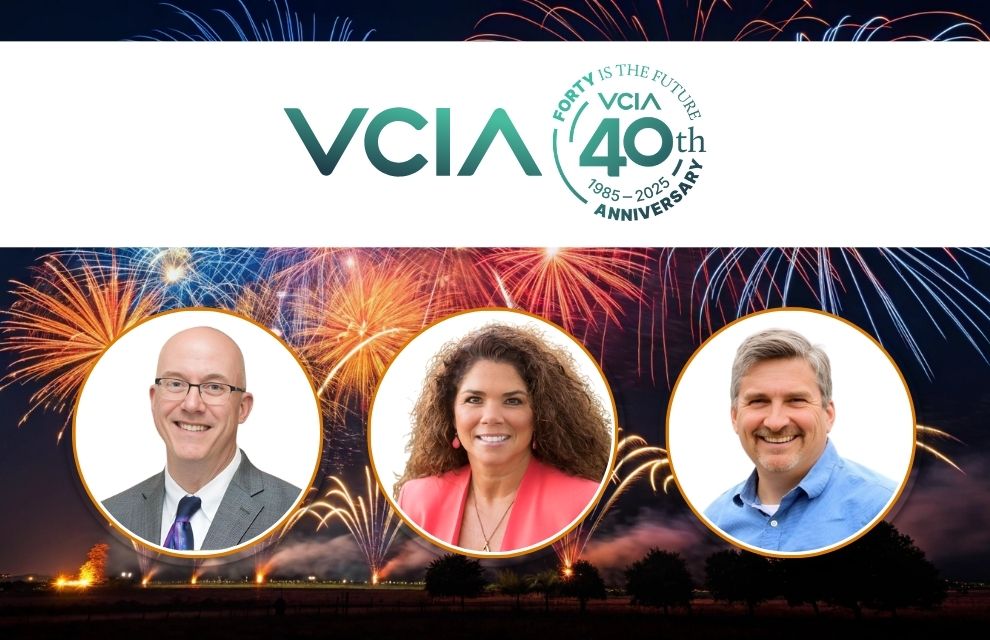
After four decades of collaboration, cooperation, knowledge sharing, and community building, the Vermont Captive Insurance Association is reflecting on the important role it has played in the success story of captive insurance. Here, prominent figures from its past and present share their favourite experiences, fondest memories, and advice for the future
When the Vermont Captive Insurance Association (VCIA) comes up in conversation, it is always the people that dominate.
Four decades of lobbying, education, roadshows, and annual meetings are the highlights in the association’s timeline of the past 40 years on its website, but it is the people behind those achievements who elicit the broadest smiles.
Richard Smith was president of the VCIA from 2009 to 2022. After stepping down, he spent time with family and travelled.
He is now consulting a northern Vermont planning commission on flood resiliency, an increasingly critical issue nationwide.
Smith says: “The people in the industry are the best. I remember a terrific quote early in my tenure from Tom Jones, one of the captive industry’s premier attorneys.
He said, ‘Rich, there are no assholes in the captive industry — and if there are, they don’t last long’. How right he was!”
“Every year, whether at the VCIA’s conference or one of the other conferences around North America, I drew great energy and inspiration from those in the field,” Smith continues.
“And tiny Vermont had an oversized influence in the industry. I remember when former Vermont deputy commissioner Dave Provost walked into the exhibit hall at the CICA conference in Scottsdale, Arizona, all heads turned, and you could hear people whispering like Mick Jagger had entered the building.”
Provost, who retired from his role as commissioner of the captive insurance division in the Vermont Department of Financial Regulation in 2022, is currently focusing on “giving back, because it was a real gift for me to do what I did for 20 years with the state”.
This work includes being on half a dozen boards and some consulting. He is also “doing all those things you want to do, everything with an ‘ing’ — fishing, golfing, hiking, biking. You name it, I do it. I bought a new canoe last fall so I’ve been canoeing and paddling around New England and New York and having a blast.”
For Provost, the people at the VCIA and working for the state were a big factor behind Vermont’s tremendous growth as a captive domicile, alongside a global captive growth boom and the state’s own extremely high standards.
The study that launched a thousand domiciles
As the number of captives being licensed grew, Vermont’s economic impact study on captive insurance in 2001 served as something of a launchpad. “It became known as the study that launched a thousand domiciles,” Provost says, “because every state took that to their legislature and said they could do it too. And to a certain extent you can, they all copied our law. But they didn’t copy our people and you can’t clone them”.
“We created an environment for businesses, no matter where they were from or what type, to thrive. I think we captured so much good business because we kept such high standards. With a lot of hard work, a little bit of luck and maintaining those high standards, we grew into a top domicile. And our marketing and licensing and examination processes — everything we did was to a high standard. And that really made a difference in attracting those top-notch companies of all sizes in Vermont.
“In turn, that helped us attract really high-quality people and a lot of them are still active. There are people in the business with me in 1989 who are still there. Gary Osborne, Ed Precourt, Nancy Gray — Sandy Bigglestone hired me at the department and she’s taken my job since and is keeping up the traditions.”
Smith puts Vermont’s success as a captive domicile down to these same people. He says: “One of the principal factors driving the remarkable growth in captives is the dedicated effort of numerous professionals across various service sectors within the industry, who actively promote captives’ benefits.”
At the same time, the VCIA has grown and evolved to support and encourage the state’s journey toward becoming the world’s premier captive domicile.
Smith says: “The VCIA grew in tandem with the State of Vermont’s initial foray into the captive industry over 40 years ago. My predecessors, Lisa Ventriss and Molly Lambert, built up the VCIA to be the premier captive association on the planet.
“In 2009, when I became president, the economy was still in a hangover from the financial crisis, yet captives remained strong. I think my main accomplishment was to not do something: VCIA and the State of Vermont never sat on our laurels as we strived to be the best captive domicile and best association in the industry.
“Partnering with the state, the VCIA went to the legislature every year to update, refine and innovate Vermont’s captive laws to make sure we were keeping up with the needs of the industry. Being responsive, open, and working hard with our partners allowed us to not just thrive but excel.”
From humble beginnings
Provost remembers the VCIA’s humble beginnings, as his boss at broker and captive manager Johnson & Higgins was made treasurer of the association, “which meant he wasn’t going to do the work, I was!”
Provost continues: “That meant I got to be closely involved with the VCIA and I can remember times when we needed a new member so we could pay Diane Leach next week.”
During this time, the VCIA’s now established primary role was pioneered. As is the case with many business associations, someone from the industry had to serve as president for a term.
It was usually a captive manager or captive owner in the early days, Provost explains, and all the captive managers attended regular meetings with the VCIA.
Provost says: “That lasted for a while. The managers kind of didn’t want to talk to each other necessarily as it was competitors around the table.”
But the VCIA overcame that perfectly natural inclination to compete rather than collaborate, laying the groundwork for a foundational process that connected the industry with legislators.
Provost notes: “The contact between captive managers, the VCIA and the state continued, and that became one of the processes every year.
“The VCIA would talk to the captive managers and figure out what needed to be tweaked at the legislative level, however big or small, to keep Vermont at the forefront of captive insurance.
“Then the VCIA would work with us as the regulator and the legislature and it just became the process. This was crucial to maintaining those high standards.
“We made sure, even if we didn’t need major legislative tweaks, to get in front of the legislature, say thank you and remind them of what captive insurance brings to Vermont.”
Case in point
Part of this work involved presenting case studies to the legislature and bringing captive owners to Vermont to speak in person.
One year, Provost recounts, experienced captive professional Heather McClure, who is now managing partner at Helio Risk, spoke to the legislature about the Vermont-based captive of OU Medicine, at the University of Oklahoma, where she spent 14 years of her career.
Provost says: “Heather had the legislature in tears, because she was talking about how the money they saved from having a captive in Vermont helped them to save children. She demonstrated that captive insurance really has an impact on lives, it’s not just about dollars.”
Another VCIA innovation that proved powerful and has remained a mainstay is the Captive Insurance Roadshow, launched in 2002. Provost remembers them fondly, the VCIA and captive managers heading around the country two or three times a year to educate people about what captives are and how they work.
They were also an opportunity to educate and network with the legislators and insurance departments of other states, who were often on the cusp of passing their own Vermont-modelled captive insurance laws. “Those were a lot of fun,” Provost says.
Anne Marie Towle, who leads the global risk and captive solutions team at Hylant, having joined the firm around six years ago, has been in the captive insurance industry for 33 years, six of which she spent on the VCIA board of directors and in 2017 she was the annual conference chair, having served on the conference committee for many years before moving aside to give the next generation the opportunity to serve. She is also currently an instructor for the International Center for Captive Insurance Education (ICCIE), an organisation the VCIA helped to launch with the State of Vermont.
She says: “I think the VCIA has been great at education for potential captive owners. There is the big conference every year and then the association hosts various webinars to educate, not only on Captive 101 but tax items, tax law changes and legislative items.
“The association is also great with the roadshows, getting out there and promoting across the country.
A couple of years ago, the VCIA went to Mexico, all to attract people to come to Vermont and license in the state.
“I think it’s very important that the VCIA continues to do that, to be seen and looked at as a premier organisation that helps provide the foundation for people to learn, know and understand the captive insurance industry, whether it’s a service provider or a potential captive owner.”
The VCIA Annual Conference
Where the VCIA is best placed to carry on this work is the annual conference, which is held every year in Burlington in the month of August.
It’s an event that regularly attracts more than 1,000 captive professionals from across the US and internationally, who benefit from 30+ educational sessions and can network with around 70 to 80 exhibitors.
Even rival captive domiciles regularly attend the VCIA Annual Conference, with the Oklahoma Insurance Department and State of Utah Department of Insurance both exhibiting at this year’s event.
When asked about his major VCIA Annual Conference highlights, he remembered how much he looked forward to seeing all his friends and colleagues come to Vermont every year. Smith also pointed to the virtual event held in place of the usual in-person gathering due to the Covid-19 lockdowns.
He says: “One of the hardest, and most memorable conferences was during Covid-19.
“I had to make the call to cancel the onsite conference and substitute an online version. It was a difficult choice, but I think it was the right one.
“And although I missed seeing all my friends and colleagues in person, I think the VCIA pulled off an incredible accomplishment by attracting so many people over the internet.”
An ode to the treasury
Among his own annual conference highlights, Provost recalls giving the VCIA treasury budget — in the form of poetry.
He says: “I was the treasurer of the VCIA by the — in title, not just doing the work. And one year I gave the treasury report and I did it in poetry. And somebody found a picture from that annual conference, which would have been in the early 1990s, where I had a full head of hair — and I wore the big glasses too.”
Another highlight for Provost was the state legislature passing a special resolution thanking Len Crouse, the late Ed Meehan and him for their contributions to the state economy.
“That was signed by the governor and passed by the legislature. We were there on the house floor. That was a pretty big highlight.”
Poetry aside, Provost expresses a genuine fondness for the regular coming together of colleagues and peers enabled by captive insurance conferences, including the VCIA’s.
He says: “Insurance is a relationship business and captive insurance is even more so. You’re dealing with the same people all the time and going to conferences is like going to a class reunion that happens five times a year.
“You develop real friendships but also real business relationships that really pay off because you know somebody will ask you who can do this for them and you’re able to give them three or four names to go to talk to, because those are the experts in that field.
That’s through networking. We all have a ball and we all enjoy each other’s company. A lot of credit for that goes to Diane Leach. From day one, when we were having conferences, she wanted quality seminars.
“She made you work and you had a timeline to follow. I’ve spoken at seminars where I didn’t talk to anyone until five minutes before getting on stage. That is not the case when you’re doing a seminar for the VCIA. There is a lot of preparation involved to make sure it’s a quality presentation and that really shows.”
The VCIA is using its 40th anniversary as an opportunity to look ahead to the next four decades, with a renewed wave of advocacy in Washington DC planned and initiatives under the association’s three pillars of advocacy, community and member engagement, and education being developed.
Of course, current CEO Kevin Mead is also stepping down and the search for his replacement is underway.
Looking forward
With the next 40 years in mind, Towle offers these words of advice to the VCIA and its current and future members to aid them as they navigate this future: “My advice is what I tell young people all the time and, for the VCIA to continue to be relevant, it needs to be curious and ask questions.
“Ask our younger members and generations what they want and value out of membership, because even though the VCIA has been around a long time and it has had long-time employees there too, they need to be open to a lot of new ideas and doing things differently.
“What a Gen Z wants out of this versus me as a Gen Xer could be very different and we have to adapt to all members in different age groups, but we have to make sure we’re capturing particularly that younger generation, because they are the future and giving them the support that they need is important.
“It’s the same with younger captive owners, they look at things differently.
“Where a lot of people would call around, now people are doing research online and they’ll ping you online, whether through LinkedIn or your website.
“It’s very different from what it historically was and you have to figure out a way to attract those people who are really driven by technology.
“Obviously there’s still networking and handholding with in-person education, but the advice I would give is to be flexible, adaptable and curious.”
Smith’s advice is succinct but captures the essence of the association very well: “My only advice is to keep on doing what you do so well! I believe with the same focus, innovation, and hard work that VCIA and the State of Vermont have exhibited over the past 40+ years will ensure another successful 40 years for the captive insurance industry.”
For Provost, the State of Vermont, with the support of the VCIA, must keep its standards high.
When changes need to be made, they should be gradual and carefully calibrated so they do not upset what has already proven to be so successful.
The next generation of captive professionals should also be aware that careers in Vermont are long and that they will be working with the same people for years, so “don’t burn any bridges”, Provost says.
“And volunteer to do things, especially the things no-one else wants to do. Try them out because you can’t go wrong and you’re going to learn things.”